
Portfolio · BoardsHow the company brain stays current
Saved Maru
Here's the company brain I built, how I got there, and where it stands.
Here's the company brain I built, how I got there, and where it stands.
Every new AI chat shouldn't need a fresh explanation of my company, my projects and what it's allowed to do. And I was explaining it every single day. Facts went stale, the same thing lived in different places, and files sat on one computer and not the other. What I wanted was one brain for the company: one place where everything lives, always up to date, that every AI and every person reads first.
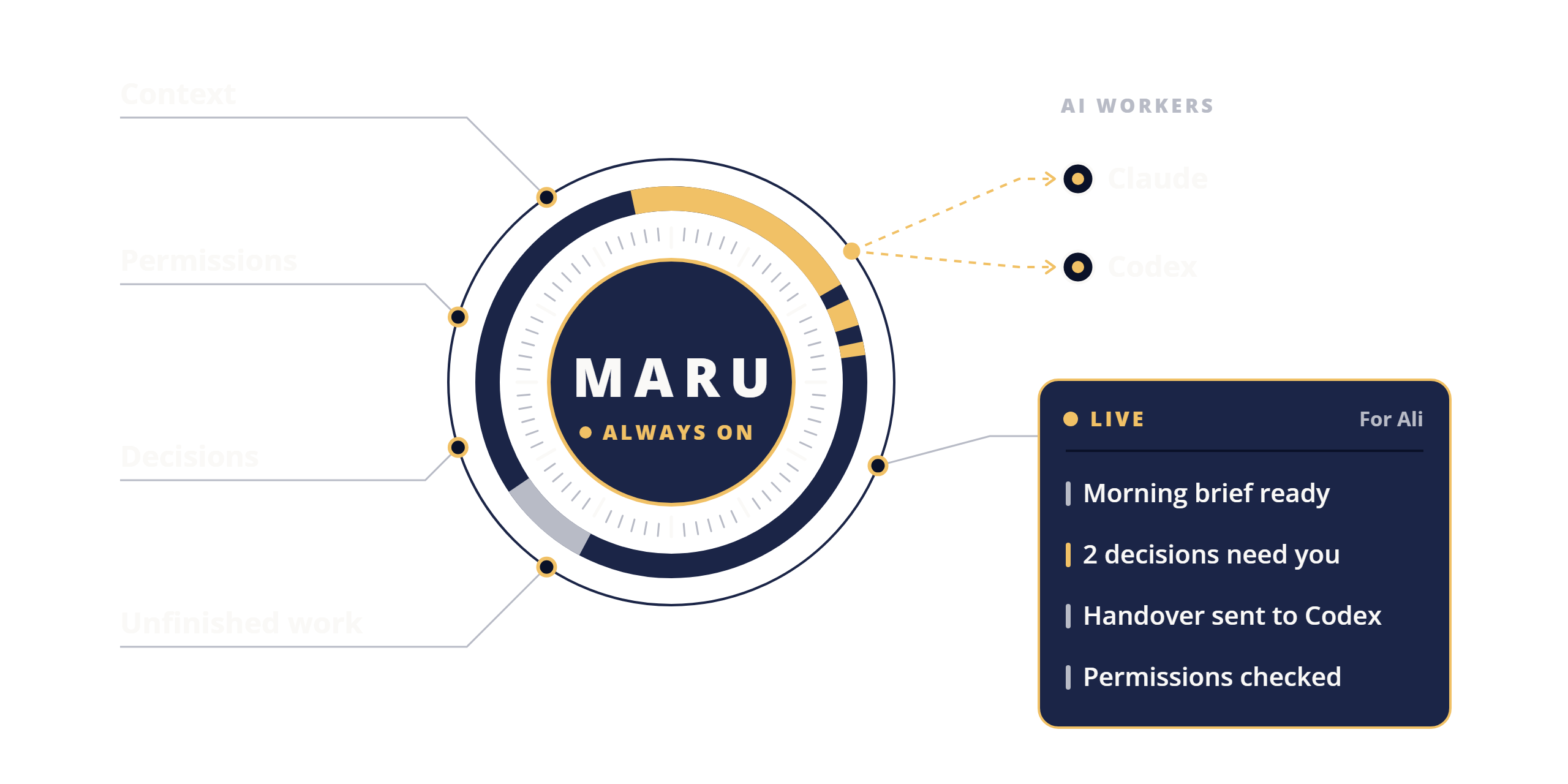
The Maru dial holds context, permissions, decisions and unfinished work. Claude and Codex both work from it.
It started as a way to keep my Flomaru and personal files and chats in order. Then I had my agents take stock of what I actually had. The core was spread across several folders, a few scheduled jobs had quietly stopped, and my instructions and memories had drifted apart between my two computers. So I drew one map, made sure every fact had one place to live, and picked a winner for when two sources disagree. That's when the workflow became a brain.
I keep the projects, the facts, the decisions, what's pending and who's allowed to do what in one place. Any AI chat, on either computer, reads it first, so I never explain the same thing twice. When it finishes something, it writes back what changed. Some of that it does on its own, and some it checks with me first.
How the company brain stays current. The steps in order:
Maru started as a skill and grew into a workflow with its own automations. I run Flomaru, Rimaru and my own admin on it every day, from either computer. Any AI that opens it, as my assistant or my chief of staff, already knows where things stand. Next is making it a product, so other founders and small teams can run their own company brain.